
Chilliwack Museum & Archives
|
Website: www.chilliwackmuseum.ca Email: [email protected] |
|
| Museum 45820 Spadina Avenue, Chilliwack, BC V2P 1T3 Phone (604) 795-5210 Hours: Monday, Tuesday, Wednesday and Friday Thursday: 9:00am - 8:00pm Saturdays: 10:00am - 4:00pm Sundays: Closed |
Archives Archivist: Curator: Hours: Monday to Friday Closed Saturday and Sunday |
The Chillwack Museum and Archives is an innovative, responsive, and inclusive organization that connects people with the past, present and future.
It is our goal to:
- Create experiences with local and global significance that encourage dialogue and inspire action.
- Collaborate with the community to ensure that the Society operates in a representative, participatory, and inclusive manner.
- Develop relevant programming that is creatively and intellectually stimulating, modelled to promote life-long learning.
- Make Chilliwack's diverse history accessible with the enhancement and exploration of the Musuem and Archives Collection.
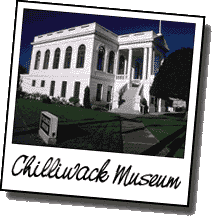
The Museum Facility
Feature Exhibits
The Chilliwack Museum exhibition galleries feature temporary exhibits that focus on various aspects of Chilliwack's human and natural history, culture and heritage. Featured exhibits rotate seasonally and highlight a range of dynamic and relevant topics with local and global resonance. Experience exhibitions featuring content curated in-house, community art installations and traveling exhibitions from across the country.
Visit the current exhibitions page to see what is on display now!
The Archives Facility
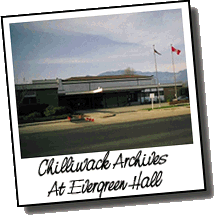
The Archives and Object collections are both located at 9291 Courbould Street (inside Evergreen Hall).
Archival Collections
Archival collections contain photographs and maps, oral histories, genealogical information, and records from individuals, families, clubs, businesses, churches, schools and community organizations. The Archives continue to actively acquire records from the community and assist the public with accessing records. View the archival collections online.
Object Collections
Object collections includes material representing the human and natural history of Chilliwack and area. The Archives continues to collect objects from the community. View the object collections online.